
Nicario Jiménez Retablo Value (Artist Price Guide)
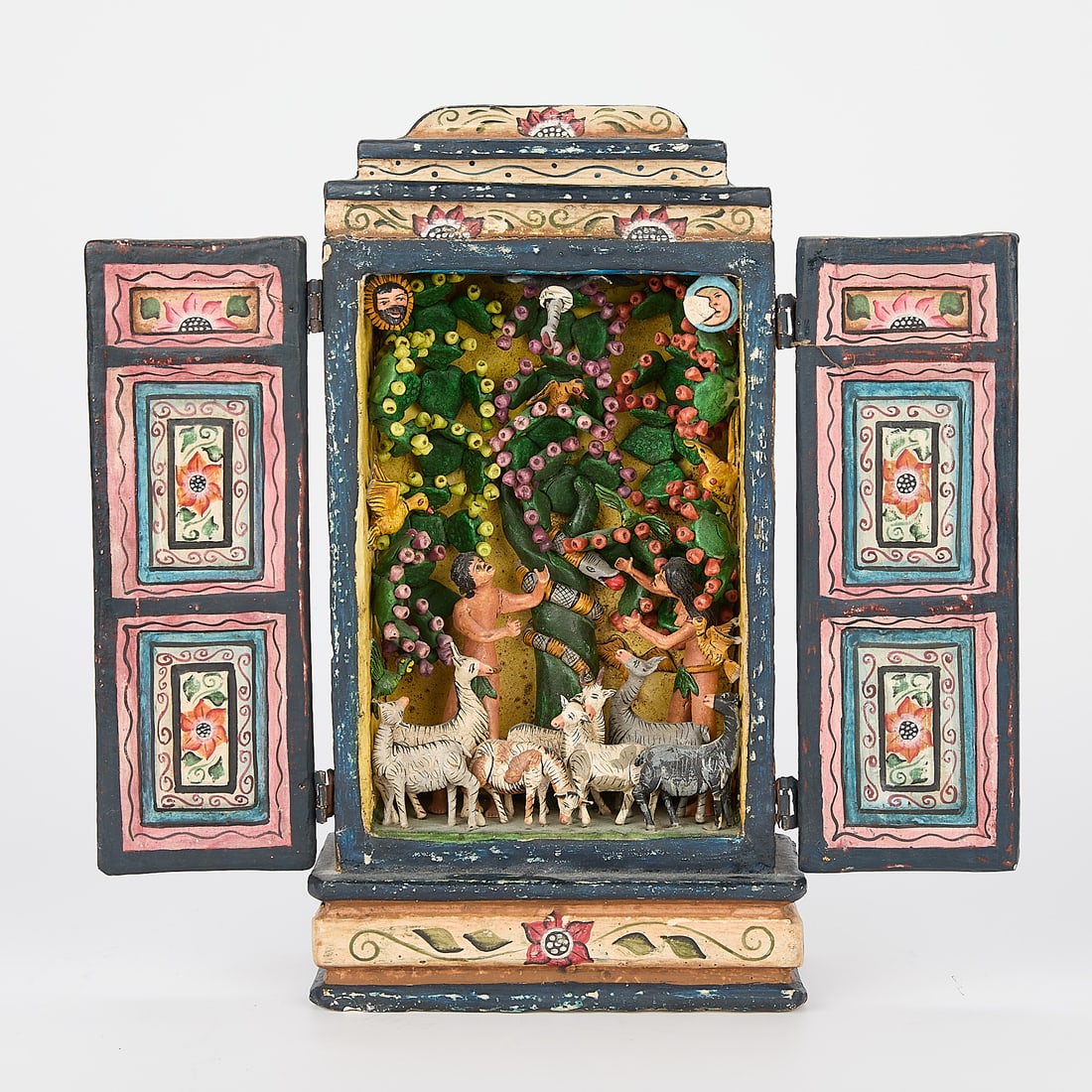
Nicario Jiménez, “Garden of Eden” Folk Art Retablo — Sold $700 by Revere Auctions
Nicario Jiménez is one of the most recognized living masters of the Ayacucho retablo — the portable Andean altar box that he has carried far beyond its devotional origins. If you own one of his pieces and are wondering what a Nicario Jiménez retablo is worth, this guide explains the factors our specialists weigh when valuing a retablo for consignment, and shows what recent examples have sold for at Revere Auctions.
Who Is Nicario Jiménez?
Born in 1957 in the Ayacucho region of the Peruvian Andes, Nicario Jiménez was raised in a family with a long retablo-making tradition. The retablo is a hinged wooden box whose interior is packed with tiny hand-modeled figures — historically saints and nativity scenes carried by travelers as portable altars.
Jiménez took that inherited form and opened it up. Alongside religious subjects, his retablos tell stories: bustling Andean markets and festivals, everyday village life, the immigrant experience, and unflinching scenes documenting the violence of Peru’s Shining Path (Sendero Luminoso) era. That expansion of the retablo into narrative and social commentary is what sets his work apart to collectors of Latin American and folk art. His work is held in the permanent collection of the Smithsonian Institution, which acquired a retablo for its landmark Seeds of Change exhibition. Jiménez now lives and works in Naples, Florida.
How a Nicario Jiménez Retablo Is Made
Each figure inside the box is sculpted by hand from a dough-like mixture of boiled potato and gypsum powder, shaped with a small wooden tool and hand-painted in bright, saturated colors. A single retablo can hold dozens of these figures arranged across multiple tiers and scenes. The material is delicate, which makes condition an important part of any valuation.
What Determines the Value of a Nicario Jiménez Retablo
Scale and number of scenes. The single biggest driver of value. A small, single-door retablo with one scene sits at the bottom of the range; large, multi-tier boxes with several doors and densely populated scenes command the most.
Figure count and complexity. Retablos packed with many finely modeled figures — a full market, a procession, a festival — represent far more of the artist’s hand than a sparse composition, and the market rewards that density and detail.
Subject matter. Standard devotional scenes are the most common. Jiménez’s narrative and socially significant subjects — the Shining Path years, immigration, distinctive Andean life scenes — tend to draw the strongest interest from Latin American and folk-art collectors, given his particular reputation for that content.
Age and period. Earlier pieces, and works tied to a documented exhibition or collection, generally carry a premium over later or generic examples.
Condition. Because the figures are modeled in a fragile potato-and-gypsum paste, chips, breaks, and paint loss reduce value materially. Original, undamaged pieces are strongly preferred.
Signature and documentation. Signed and dated retablos — ideally with a gallery label or artist certificate — bring a premium over unsigned folk-market examples.
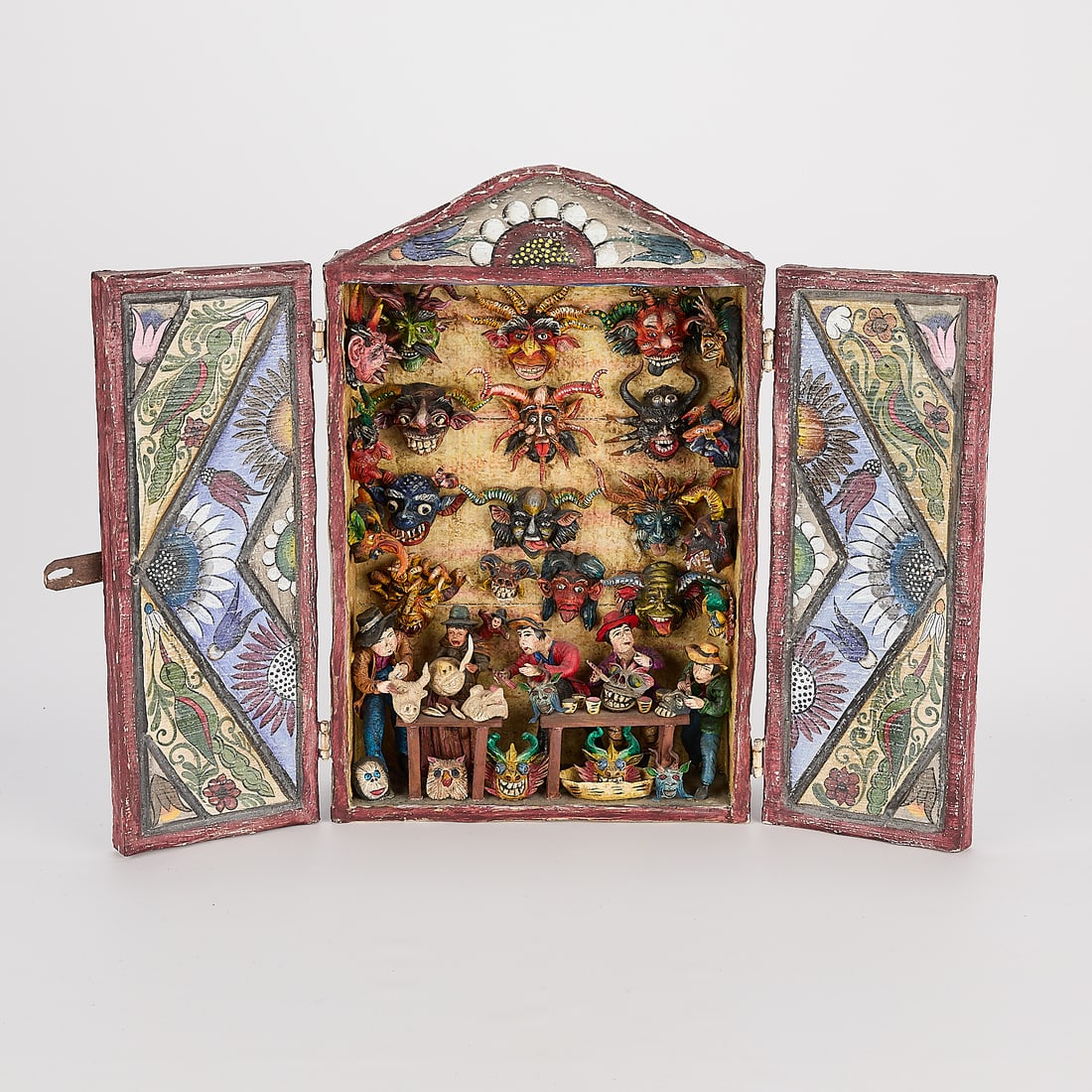
Nicario Jiménez, “Mask Maker” Folk Art Retablo — Sold $500 by Revere Auctions
Recent Nicario Jiménez Results at Revere Auctions
Auction record at Revere: a large, signed 1990s mirror retablo (48 × 32 in.), its frame filled with colorful figurative scenes, sold for $1,500 in July 2026 — the strongest Nicario Jiménez result at our house to date. The “Garden of Eden” ($700) and “Mask Maker” ($500) retablos shown above are further recent examples.
Sell a Nicario Jiménez Retablo at Auction
Revere Auctions has sold Nicario Jiménez retablos and regularly handles folk art, Latin American art, and Native and Indigenous works. Auction is the most transparent way to reach the collectors who compete for pieces like these — and getting started is free. Send us a few photographs through our free online estimate form and our specialists will tell you what your retablo could bring at auction.