
The American Studio Glass Movement
Toledo, 1962, and What Came After
Interested in selling a work by studio glass?
Until 1962, working glass meant working for a factory. The furnaces ran hot, they ran continuously, and they belonged to companies. An individual artist could no more melt glass alone than roll their own steel. Two workshops held in a garage behind the Toledo Museum of Art in the spring of that year ended that assumption, and every artist on our studio glass pages works in the space it opened.
If you own a piece of American studio glass, send photographs through our free auction estimate form.
What Happened in Toledo in 1962?
The two people responsible were an unlikely pair. Harvey Littleton was a ceramics professor at the University of Wisconsin who had grown up in Corning, New York, as the son of a glass physicist, and who had spent years insisting that an artist ought to be able to work glass directly. Dominick Labino was a working glass scientist — a research director in the fibreglass industry with a long list of patents — who actually knew how to make that true.
Littleton had a small furnace built. The first attempt went badly; the glass they had would not melt properly at the temperature the furnace could reach. Labino brought marbles of a low-melting formulation from his own industry and redesigned the furnace, and it worked. Within a few days, people with no glass training were gathering molten glass on a pipe. The second workshop that summer refined it, and Littleton then did the thing that made it a movement rather than an anecdote: he went back to Madison and built a university program.
Who Came Next?
The Wisconsin program trained an extraordinary generation — among them Dale Chihuly, Marvin Lipofsky and Toots Zynsky — and those students founded programs of their own. The Pilchuck Glass School began in Washington State in 1971 as a summer experiment in a field and became the field’s centre of gravity. Penland in North Carolina developed alongside it, with Littleton himself relocating to the area and Mark Peiser working as its first glass resident.
The decisive outside influence came in 1979, when the Murano maestro Lino Tagliapietra taught at Pilchuck and shared Venetian technique that the island had kept to itself for centuries. What Americans could physically do with hot glass changed within a few years, and the ambitious sculptural work of the 1980s and 1990s follows directly from it.
How Much Is My Studio Glass Worth Worth?
Several things determine what a work by The American Studio Glass Movement brings at auction:
- The artist — in a field this young, the name is almost the entire value; unattributed studio glass is a research problem first
- Where it sits in the story — early work by the founding generation carries historical weight beyond its appearance
- Signature and date — studio artists sign, and the base is the first place to look
- Series — most of these artists worked in named series and collectors buy by series
- Condition — as with all glass, chips and scratches are visible and material
The honest answer is that no two are alike, and the difference between an ordinary example and an exceptional one is a conversation with a specialist, not a chart. Send us photographs through our free auction estimate form — front, back, signature, and any labels — and we will tell you what you have.
The Market for studio glass
One consequence of the field being sixty years old is that the founding generation is now passing, and their estates are reaching the market. That has made this an unusually active period for studio glass, and an unusually good moment to have inherited work identified rather than stored.
The other consequence is that a great deal of studio glass is sitting in American houses unrecognised. It was bought from galleries in the 1980s and 1990s by people who liked it, and it has descended to families who see a glass vase. The difference between that description and a correctly attributed, dated, catalogued lot by a named artist is the entire value of the object. Photograph the base.
How to Sell a Work by studio glass
The strongest results for a piece of studio glass come at auction, where national and international collectors bid against each other. Revere Auctions offers free, no-obligation auction estimates: send photos and dimensions and our specialists respond with a current market valuation and a recommendation on how to sell. Consigned works are professionally photographed, cataloged, and marketed through our fine art auctions to a worldwide bidder base, and we regularly arrange shipping for consignors across the country. If you need a formal written valuation for insurance or estate purposes, our appraisal and valuation services team can help; you can also read more about how selling at auction works.
Related: studio art glass artists, our fine art department, appraisal services, free auction estimates.
Reviewed by the fine art specialists at Revere Auctions, St. Paul, Minnesota.
The American Studio Glass Movement: Frequently Asked Questions
When did the American studio glass movement begin?
In March 1962, at workshops held in a garage behind the Toledo Museum of Art by Harvey Littleton and Dominick Labino, who showed that an artist could melt and work glass in a small studio without a factory.
Why was Dominick Labino important?
He was the glass scientist who made it technically possible, supplying a low-melting glass formulation and redesigning the small furnace after the first attempt failed. He was also an accomplished artist in his own right.
What is Pilchuck?
The Pilchuck Glass School in Washington State, founded in 1971, which became the most important centre of the American studio glass movement and the place where Venetian technique was transmitted to American artists from 1979.
How do I find out if my glass is studio glass?
Look at the base for an engraved signature and date. Then send photographs to a specialist. Unsigned decorative glass and signed studio work are entirely different markets.
Interested in purchasing a a piece of studio glass work?
If you would like to learn more about the value of your a piece of studio glass works, contact us today for a free auction estimate.
Exceptional Results
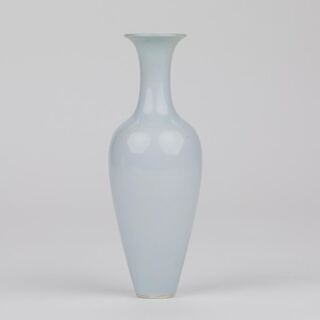 Chinese Clair-de-lune Porcelain Vase w/ Box, MarkedSold For $270,000
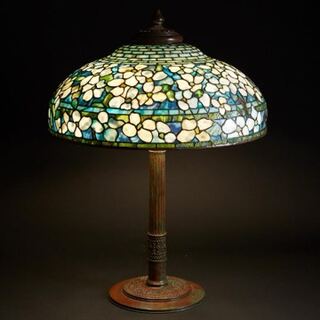 Tiffany Studios Leaded Glass and Bronze "Dogwood" LampSold For $60,000
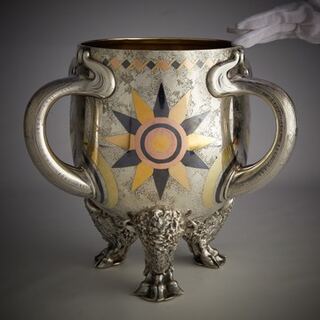 Large Tiffany Sterling Trophy Cup, 83.21 Troy ozSold For $44,000
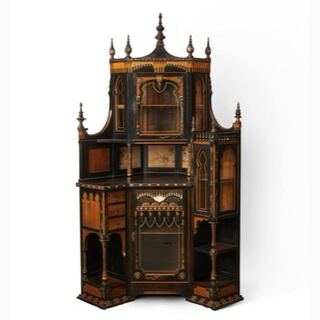 Carlo Bugatti Monumental Corner CabinetSold For $40,000
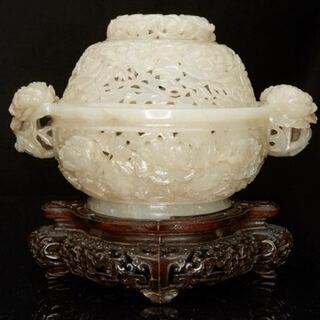 18th c. Chinese Reticulated Jade Censer with StandSold For $34,000
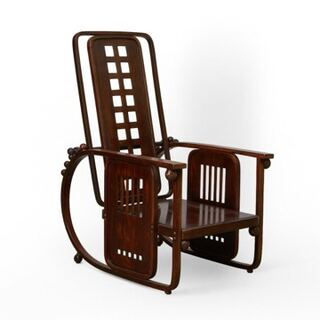 Joseph Hoffmann for Kohn "Sitzmaschine" ChairSold For $15,000
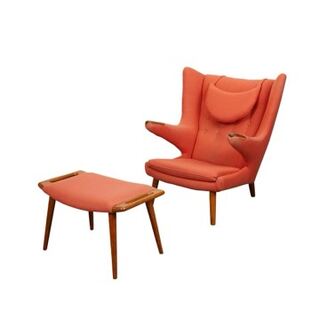 Hans Wegner AP Stolen "Papa Bear" Chair & OttomanSold For $15,000
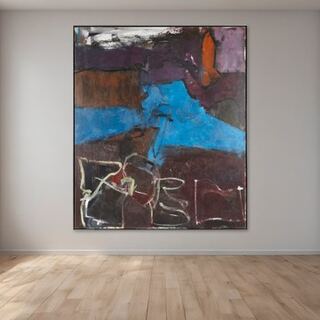 Grace Hartigan "Dublin" Oil Painting 1958-59Sold For $525,000