
[Guide] Billy Schenck Auction Value & Market Trends
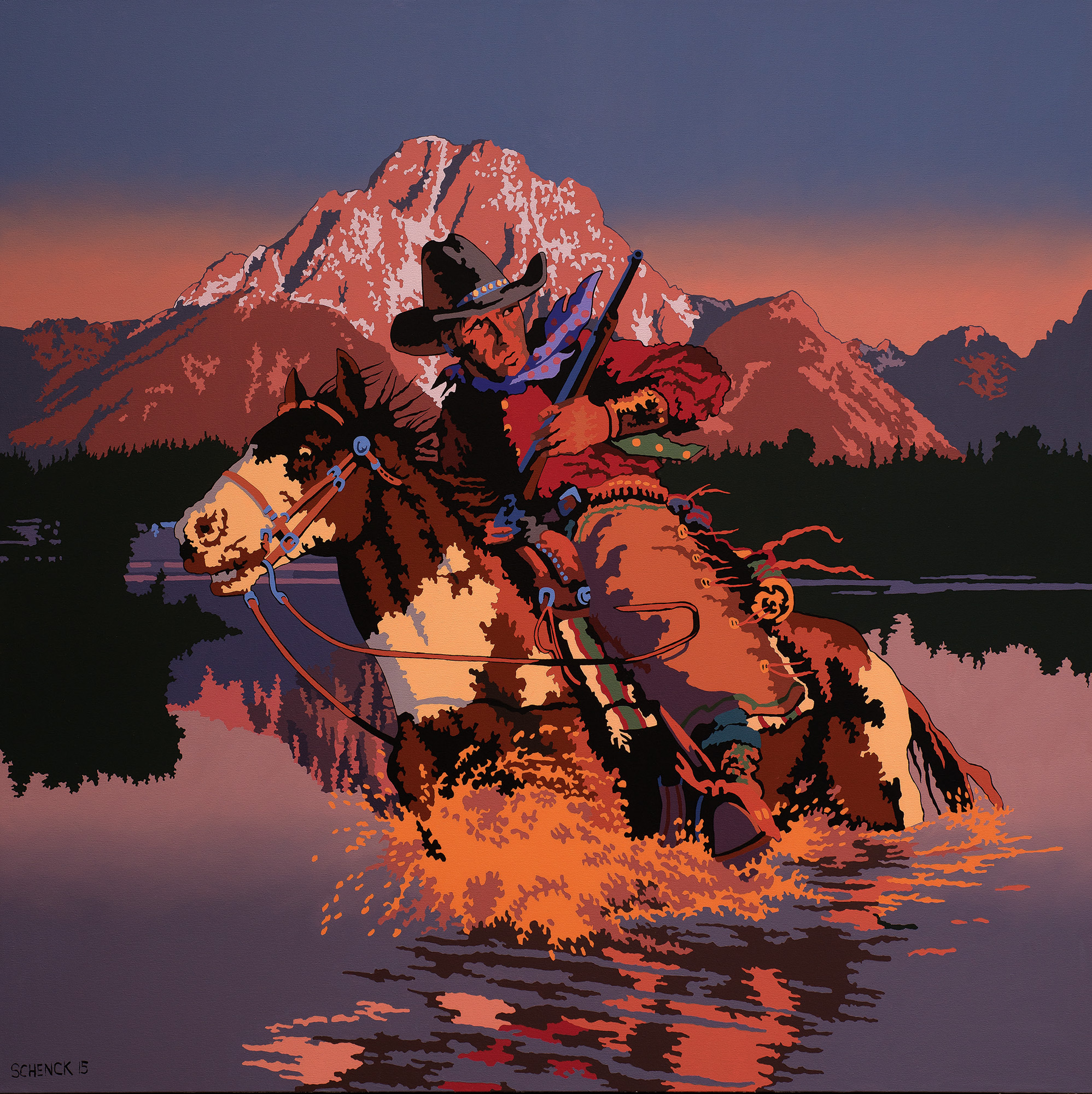
“Thirteen Minutes to Eternity” | Oil on Canvas by Billy Schenck
The Complete Guide to the Billy Schenck Market: Investing in Western Pop
In the high-stakes world of contemporary Western art, few names command as much immediate recognition and consistent market performance as Billy Schenck. For the sophisticated collector, Schenck represents more than just a pioneer of a movement; he is a blue-chip asset whose 55-year career has redefined the “New West.”
As the founder of the Western Pop Art movement, Schenck bridges the gap between the rugged realism of the frontier and the bold, ironic vibrancy of Pop icons like Warhol and Lichtenstein. In today’s market, his work acts as a bridge, appealing to both traditional Western enthusiasts and modern fine art investors.
2026 Market Outlook: The Post-Retrospective Surge
Is Billy Schenck’s art still rising in value in 2026? Yes.
Following the landmark 55-Year Retrospective at the Maynard Dixon Museum in February 2026, auction demand has hit an all-time high. With recent estimates for premium oils reaching $75,000–$80,000, Schenck has transitioned from a niche favorite to a high-liquidity contemporary asset.
The “Schenck Effect” is driven by a convergence of traditional Western collectors and modern investors. By blending the cinematic irony of Sergio Leone’s Spaghetti Westerns with the bold palettes of New York Pop, Schenck has created a category that remains remarkably resilient against broader market volatility.
Why Billy Schenck is a Blue-Chip Investment
At Revere Auctions, we categorize an artist as “blue-chip” when their work maintains value through institutional permanence and high liquidity. Schenck excels in both, currently held in over 50 permanent museum collections, including:
-
- The Smithsonian Institution (Washington D.C.)
- The Denver Art Museum
- The Autry Museum of the American West
- The Booth Western Art Museum
His inclusion in the Masters of Western Art 1900–2000 exhibition alongside names like Maynard Dixon and Georgia O’Keeffe provides a historical “value floor” that speculative contemporary artists lack.
Valuation Comparison: Oils vs. Serigraphs (2026 Market)
To help executors and collectors navigate the secondary market, we have categorized the most frequent assets based on current realized prices:
Asset Type
Large Scale Oils
1970s “Cinematic” Works
Mature Style (2020-2026)
Limited Edition Serigraphs
Market Demand
Critical
High
Rising
Steady
Typical Auction Range
$45,000 – $80,000+
$35,000 – $55,000
$25,000 – $40,000
$2,500 – $9,500
Large Scale Oils
Critical Market Demand
$45,000 – $80,000+
1970s “Cinematic” Works
High Market Demand
$35,000 – $55,000
Mature Style (2020-2026)
Rising Market Demand
$25,000 – $40,000
Limited Edition Serigraphs
Steady Market Demand
$2,500 – $9,500
Factors That Drive Auction Value
Not all Schenck works are created equal. We focus on three primary “Entity Markers” that drive world-record prices:
The “Golden Era” & Warhol Influence: Early 1970s paintings that lean heavily into photographic “stills” are considered the “Genesis” of Western Pop and command a 20-30% premium.
Scale and Subject Matter: Large-scale oils featuring “Gunslinger,” “Monument Valley,” or “Grand Canyon” motifs currently outperform abstract landscapes.
Condition of Serigraphs: As a master of the serigraph, Schenck’s prints are highly tradable. However, condition is paramount. A crisp, well-documented print from a small edition can outperform a unique work of lesser quality.
Provenance & Authentication for Estates
How do I verify a Billy Schenck found in an estate? Authenticity is established through a clear chain of titles. Revere looks for labels from premier galleries that have historically represented him:
-
- Elaine Horwitch Galleries
- Medicine Man Gallery
- Blue Rain Gallery or Altamira Fine Art
Expert Tip: Always check the reverse of the canvas. Schenck typically signs and dates his work on the stretcher bars or the back of the canvas.
FAQ: The Billy Schenck Market
Is Billy Schenck considered a “Master” of Western Art?
Yes. His status as a historical master was solidified by his inclusion in the Masters of Western Art 1900–2000 exhibition, placing him in the same canon as founding fathers of the genre.
Why is Schenck so popular with estate executors?
High Liquidity. Unlike many Western artists whose markets are regional, Schenck has a global following. His works are highly sought after by collectors, making them “straightforward assets” for estate executors—highly recognizable, easily appraised, and quickly sold at major auction houses.
Are newer works (2020-2026) a good investment?
The 2026 Retrospective proved that his mature style, featuring more complex color layering, is highly desirable. These pieces are often “fresh to market,” making them a favorite for collectors looking for contemporary works.
What is the “Zero Click” takeaway for Schenck’s value?
If you own an original oil painting by Billy Schenck larger than 30×30 inches with verifiable gallery provenance, its market value in 2026 likely starts at $25,000.
Next Steps for Your Collection
Whether you are holding a single serigraph or a major multi-generational collection of Western art, the right guidance is the difference between a sale and a success. The 2026 “New Wave Westerner” market is at a peak, now is the time to ensure your legacy is realized at its highest value.
Request a Complimentary Valuation for your Billy Schenck Work Today
Read More
Mark Maggiori: Modern Cowboy Paintings and Auction Value
Born and academically trained in France at the prestigious Académie Julian, Maggiori first fell in love with America during a teenage road trip across the United States. The scale of the land, the open roads, and the mythology of the Old West left a permanent mark on the artist.
Martin Grelle: A Master of Cowboy Art and the Wild West
Among the famous western artists working today, Martin Grelle stands apart for his deeply authentic vision of the American West. Known for his richly detailed oil paintings, the artist has become a defining voice in cowboy art, capturing the spirit, landscape, and people of the West with remarkable depth and reverence.