
Paul Stankard
American Glass Artist, born 1943
Interested in selling a work by Stankard?
Paul Stankard is the reason the word paperweight is not a limitation. Before him it meant a Victorian desk object; after him it meant an encased world — wild flowers with their roots showing, bees and seed pods, and small human figures living in the soil beneath the plants. He is largely self-taught as an artist, spent his first decade as an industrial scientific glassblower, and brought that precision to something nobody had asked for.
If you own a Stankard, or a botanical weight you think might be one, send photographs through our free auction estimate form and our specialists will tell you what you have.
Who Was Paul Stankard?
Stankard was born in 1943, one of nine children in a Massachusetts family, and grew up dyslexic in an era with no name for it and little patience for it. School was miserable. He trained instead at a technical institute in scientific glassblowing — making the laboratory apparatus that chemists need — and spent roughly ten years doing exactly that, in southern New Jersey, competent and unfulfilled.
He began making paperweights on the side in the late 1960s, studying the great nineteenth-century French weights and then walking out into the fields around his home to look at what actually grows there. In 1972 he left industry to make them full time, which at the time was not an obviously sane decision. He has since received honorary doctorates, lectured widely, written about the work, and had pieces enter major museum collections. The meadow at the edge of the New Jersey Pine Barrens is still the subject.
What Does Paul Stankard Make?
The core of the work is the encased botanical: a flowering plant, rendered in glass petal by petal and leaf by leaf at close to life scale, suspended in a clear dome with its root system trailing below. Everything in it is lampworked — built at a torch from rods of coloured glass — and then encased in molten clear glass without disturbing it, which is the part that is very hard to do.
Alongside the flowers live the details his collectors know him for: honeybees, seed pods, ripening berries, tiny word canes carrying words like fertile or unity, and the root people, small figures growing among the roots. His formats extend beyond the traditional dome to upright blocks, cubes and columns, and he has collaborated with other artists, including Rick Ayotte.
How Much Is My Paul Stankard Paperweight Worth Worth?
Several things determine what a work by Paul Stankard brings at auction:
- Format — the upright blocks and cubes are a different market from the classic domed weight
- Complexity — the number of botanical elements, and whether bees, seed pods, word canes or root figures are present
- Date and signature — he has signed and marked work in different ways across a long career, and the mark is part of the identification
- Series — his named bodies of work are collected differently; the root-person pieces are their own conversation
- Condition — an encased weight is durable but the dome surface scratches, and polishing history matters
The honest answer is that no two are alike, and the difference between an ordinary example and an exceptional one is a conversation with a specialist, not a chart. Send us photographs through our free auction estimate form — front, back, signature, and any labels — and we will tell you what you have.
The Market for Stankard
Stankard has the deepest market of any living American paperweight artist. His work has circulated through more than fifty different salerooms nationally, and it comes up steadily rather than in bursts — the sign of a broad collector base rather than a single collection being dispersed. Most of what appears is in the hundreds of dollars; his major pieces are a different matter entirely, and the gap between the two is enormous.
That gap is precisely why identification is worth doing properly. A domed weight with three flowers and a domed weight with a full botanical assembly, a bee, word canes and a root figure can look superficially similar in a phone photograph and belong to different price brackets. Send the photographs and let a specialist look before you decide anything.
How to Sell a Work by Stankard
The strongest results for a Paul Stankard paperweight come at auction, where national and international collectors bid against each other. Revere Auctions offers free, no-obligation auction estimates: send photos and dimensions and our specialists respond with a current market valuation and a recommendation on how to sell. Consigned works are professionally photographed, cataloged, and marketed through our fine art auctions to a worldwide bidder base, and we regularly arrange shipping for consignors across the country. If you need a formal written valuation for insurance or estate purposes, our appraisal and valuation services team can help; you can also read more about how selling at auction works.
Related: studio art glass artists, our fine art department, appraisal services, free auction estimates.
Reviewed by the fine art specialists at Revere Auctions, St. Paul, Minnesota.
Paul Stankard: Frequently Asked Questions
How much is a Paul Stankard paperweight worth?
It ranges very widely. Simple domed weights are common and modest; complex botanical assemblies with bees, word canes or root figures, and the upright block formats, sit far higher. Revere Auctions gives free estimates from photographs.
What are Stankard’s root people?
Small human figures worked into the root systems beneath his encased plants. They are among the most sought-after elements in his work and have their own page.
How do I identify a Paul Stankard paperweight?
Look for a signature, initials or a signature cane, usually on or near the base, and for the characteristic root system trailing beneath a life-scale flowering plant. Photograph the base and the underside and send them to a specialist.
Did Paul Stankard work with other artists?
Yes, including collaborative paperweights with Rick Ayotte. Collaborative pieces are identified as such and are collected in their own right.
Interested in purchasing a a Paul Stankard paperweight work?
If you would like to learn more about the value of your a Paul Stankard paperweight works, contact us today for a free auction estimate.
Exceptional Results
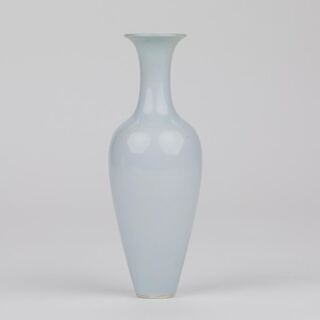 Chinese Clair-de-lune Porcelain Vase w/ Box, MarkedSold For $270,000
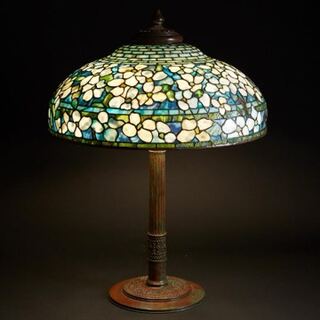 Tiffany Studios Leaded Glass and Bronze "Dogwood" LampSold For $60,000
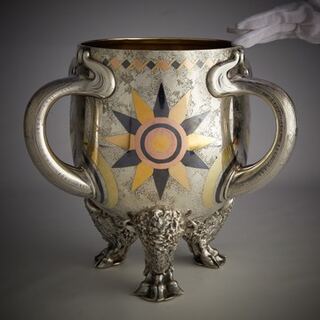 Large Tiffany Sterling Trophy Cup, 83.21 Troy ozSold For $44,000
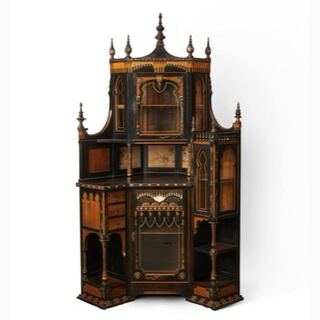 Carlo Bugatti Monumental Corner CabinetSold For $40,000
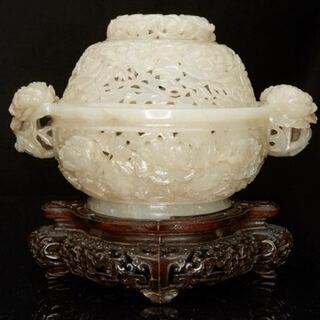 18th c. Chinese Reticulated Jade Censer with StandSold For $34,000
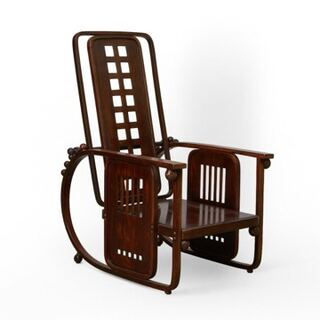 Joseph Hoffmann for Kohn "Sitzmaschine" ChairSold For $15,000
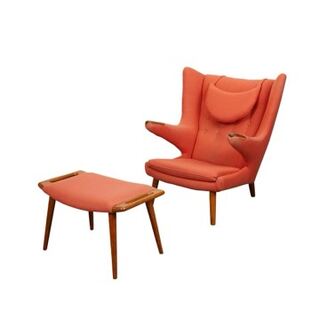 Hans Wegner AP Stolen "Papa Bear" Chair & OttomanSold For $15,000
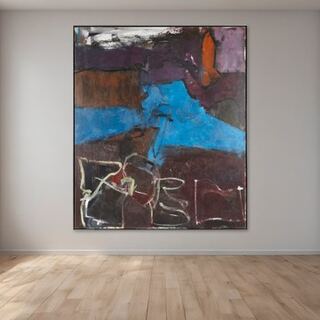 Grace Hartigan "Dublin" Oil Painting 1958-59Sold For $525,000