
Southwestern Pueblo Pottery
Values, Auction Results & How to Sell
Interested in selling Southwestern pottery?
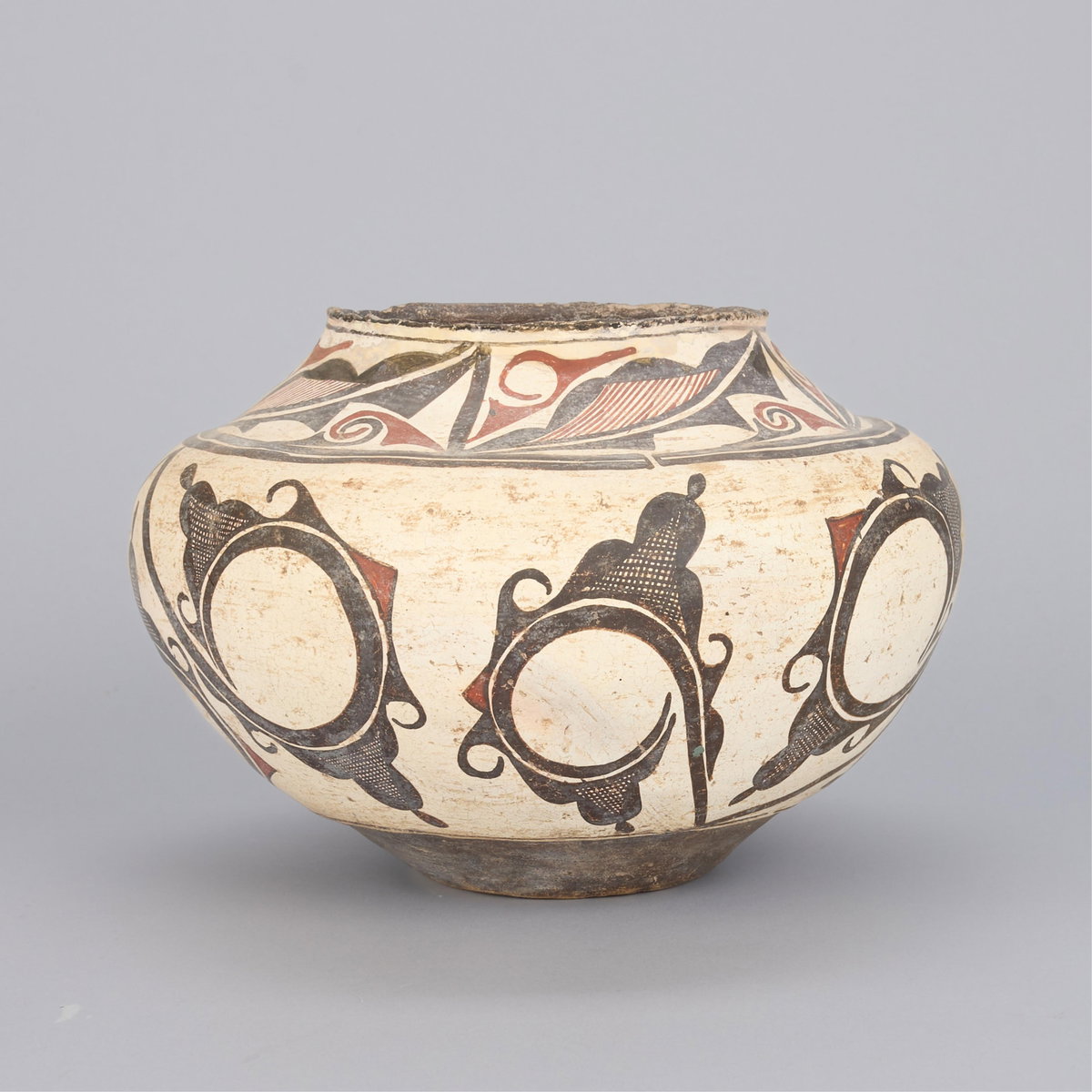
Most Southwestern Native American pottery sells at auction for a few hundred dollars. Pots by a recognized potter are a different market: work by Maria Martinez has a median auction price of $1,400, with the best examples reaching $20,000, and pots by Tony Da run to a median of $5,500. Maker, age, size, and condition account for almost all of the difference. Revere Auctions has sold more than 190 lots of Southwestern pottery since 2018, including a 19th-century Zuni polychrome olla at $5,600 and a Maria Martinez blackware olla at $5,000. We offer free auction estimates: send photos of your pot, including the base, and we will tell you what it is worth.
What Is Pueblo Pottery Worth?
The table below gives median and top auction prices for the potters and families whose work comes up most often. The median is the middle result, so half of that potter’s pots sold for less. The gap between the median and the top of the range is wide for every name on the list, because a small, late, or damaged pot by a famous potter is worth a fraction of a large early one in good condition.
| Potter or family | Median price | Highest result |
|---|---|---|
| Tony Da (San Ildefonso) | $5,500 | $50,000 |
| Virgil Ortiz (Cochiti) | $2,200 | $5,500 |
| Roxanne Swentzell (Santa Clara) | $2,000 | $14,000 |
| Popovi Da (San Ildefonso) | $1,600 | $9,000 |
| Maria Martinez (San Ildefonso) | $1,400 | $20,000 |
| Tafoya family (Santa Clara) | $1,300 | $35,000 |
| Santana Martinez (San Ildefonso) | $1,200 | $17,000 |
| Lucy M. Lewis (Acoma) | $1,000 | $5,500 |
| Nampeyo family (Hopi-Tewa) | $950 | $10,000 |
| Naha and Navasie families (Hopi) | $810 | $2,250 |
All prices are hammer prices (before buyer’s premium), from U.S. auction results July 2021 through June 2026.
Unsigned historic pots are valued on age, pueblo, form, and condition rather than on a name. A good 19th-century Zuni or Acoma olla can outsell a signed 1970s pot by a well-known potter. Pottery made for the tourist trade from the 1930s onward, and small souvenir pieces of any date, sit at the bottom of the market and usually sell for under $200.
Southwestern Pottery Sold by Revere Auctions
| Price | Lot | Sold at auction |
|---|---|---|
| $5,600 | 19th c. Zuni polychrome rainbird olla jar | May 2026 |
| $5,000 | Maria Martinez blackware olla | Jan 2024 |
| $4,700 | Maria Martinez San Ildefonso blackware pot | Jun 2018 |
| $4,100 | Margaret Tafoya carved redware jar | Sep 2020 |
| $4,000 | Hopi bowl, possibly Nampeyo | Nov 2023 |
| $2,800 | Maria and Santana Martinez feather-motif plate | Jan 2024 |
| $2,700 | Two Maria Martinez blackware plates | Jun 2018 |
| $2,600 | Maria Martinez and Popovi Da blackware plate | Jan 2024 |
| $2,600 | Three Santa Clara jars, Naranjo and Folwell | Jun 2018 |
| $2,000 | Virgil Ortiz Cochiti pottery jar | Jun 2018 |
| $1,900 | Maria Martinez San Ildefonso blackware pot | Apr 2026 |
| $1,400 | Marie Z. Chino Acoma pueblo pot | Sep 2020 |
| $1,200 | Acoma polychrome pottery jar, ca. 1900-1910 | May 2026 |
All lots sold by Revere Auctions. Prices are hammer prices, before buyer’s premium.
What Drives the Value of a Pueblo Pot
Maker. A signature by a documented potter is the single biggest factor. The same form and size can be worth $150 unsigned and $2,000 signed.
Age. Historic pots made before about 1940 are scarcer than later work and are valued on their own, whether or not they are signed. Nineteenth-century Zuni, Acoma, and Hopi ollas are the strongest part of that market.
Size and form. Large storage jars and water ollas bring the most. Bowls and plates follow, then small vases, seed pots, and figures. A jar over about twelve inches is in a different price class from a four-inch pot by the same hand.
Condition. Pueblo pottery is unglazed and low-fired, so chips, spalls, and cracks are common and they matter. Restoration matters more. A restored pot generally sells for a fraction of a clean example, and repainting over a repair can cut the price further. Send photos of the base, rim, and interior so condition can be assessed honestly up front.
Provenance. A collection history, an old gallery label, a dated receipt, or a family photograph of the pot in the house all help, particularly for early material.
How to Identify and Date a Pueblo Pot
Start with the base. Most pottery made after about 1920 is signed there, usually with the potter’s name and often the pueblo. Older pots are typically unsigned, so they are identified by clay, slip, form, and painted design instead.
San Ildefonso. Polished black pottery, often with a matte design over the gloss: a feather band or the avanyu, a horned water serpent. Some work is polished red, and some is polychrome.
Santa Clara. Deeply polished red or black ware, frequently carved rather than painted, with a bear paw, kiva steps, or an avanyu cut into the surface.
Acoma. Very thin, hard, light grey to white walls, painted black-on-white in fine parallel lines, sometimes with orange. Acoma clay lets a potter build unusually thin walls, and a finished pot has a distinct ring when tapped.
Hopi and Hopi-Tewa. Yellow to orange clay, usually unslipped, with stylized birds, feathers, and migration motifs drawn from ancient Sikyatki pottery.
Zuni. White or cream slip carrying the rainbird motif and the heartline deer, a deer with a line running from its mouth to its chest.
Cochiti, Kewa, and Jemez. Cream slip with black designs; Cochiti is also the home of the storyteller figure, a seated figure covered in children.
Mata Ortiz. Finely painted pottery from Chihuahua, Mexico, made from the 1970s onward. It is regularly mistaken for Pueblo pottery. It is a genuine and collected tradition, but it is a separate and generally lower-priced market.
Dating a Maria Martinez Pot by Its Signature
Maria Martinez (c. 1887-1980) of San Ildefonso Pueblo is the most collected Southwestern potter, and the name she signed changes with the decade. Her husband Julian painted her pots until his death in 1943, and the black-on-black ware they developed together dates from about 1918.
| Signature on the base | Approximate period |
|---|---|
| Unsigned | before about 1923 |
| Marie | about 1923 into the early 1930s |
| Marie & Julian | about 1925-1935 to 1943 |
| Marie & Santana | 1943 to about 1956 |
| Maria Poveka | about 1956 to the mid 1960s |
| Maria / Popovi | about 1957 to 1971 |
| Maria Martinez | later work and pieces signed after 1971 |
Published sources disagree on the exact cut-off dates, especially for the earliest signatures, so treat these as approximate. Many Maria and Popovi pots also carry a month and year painted on the base, which dates the pot directly. Popovi Da died in 1971 and Maria died in 1980.
Maria’s name has been forged, and unsigned pots are sometimes signed later by someone else. If a signature looks fresh against a worn base, or the price seems too good, it is worth having the pot looked at before you buy or sell it.
Southwestern Pottery at Revere Auctions
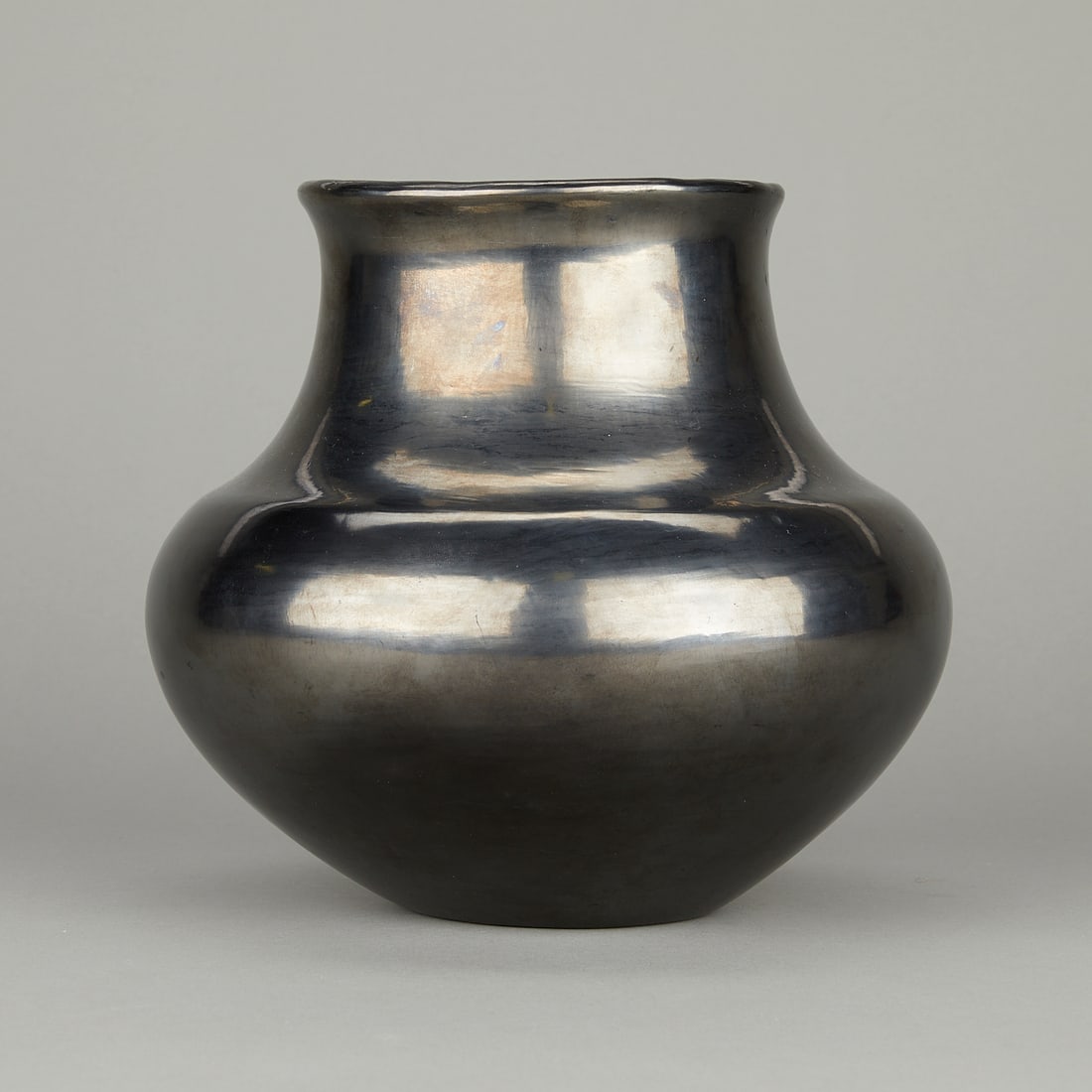
Maria Martinez, San Ildefonso blackware olla, sold for $5,000 by Revere Auctions
Revere Auctions is a St. Paul auction house with a national bidder base, and Native American art is a regular part of our sales. We have sold more than 190 lots of Southwestern pottery since 2018, from 19th-century Zuni and Acoma ollas to signed work by Maria Martinez, Margaret Tafoya, Virgil Ortiz, and the Nampeyo and Naha families. Our specialists catalog each pot with its maker, pueblo, approximate date, and an honest condition report, which is what serious collectors bid on.
Older and excavated material can raise cultural and legal questions. Before our sales we make catalogue information available to Tribal Historic Preservation Officers so that culturally significant items can be flagged, and flagged lots are held for a waiting period after the sale. Our Native American objects ethics statement sets out how that process works.
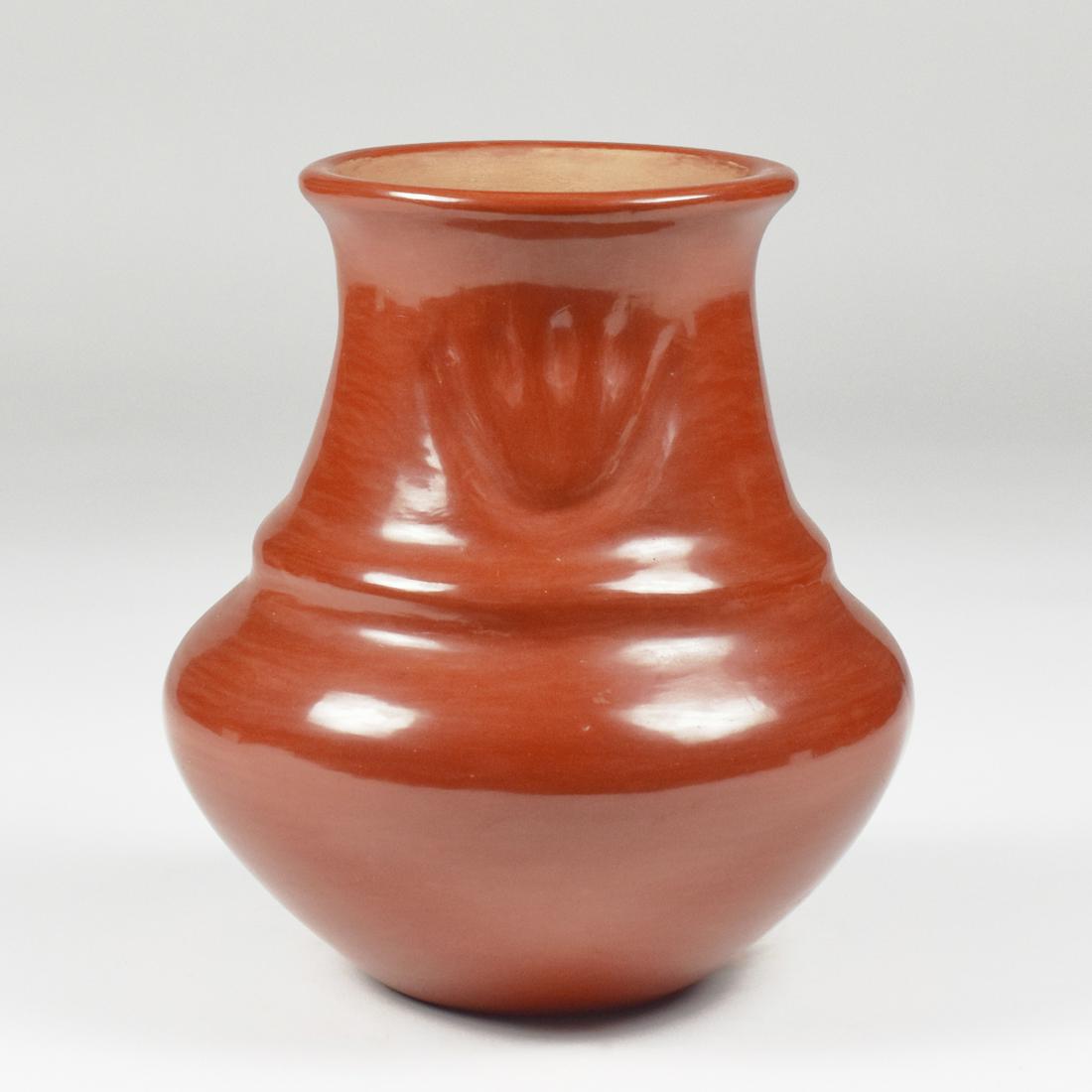
Margaret Tafoya, Santa Clara carved redware jar, sold for $4,100 by Revere Auctions
Contact our specialists to learn what your Southwestern pottery is worth
How to Sell Southwestern Pottery
The strongest results for Southwestern pottery come at auction, where national and international collectors bid against each other. Revere Auctions offers free, no-obligation auction estimates: send photos and dimensions and our specialists respond with a current market valuation and a recommendation on how to sell. Consigned works are professionally photographed, cataloged, and marketed through our fine art auctions to a worldwide bidder base, and we regularly arrange shipping for consignors across the country. If you need a formal written valuation for insurance or estate purposes, our appraisal and valuation services team can help; you can also read more about how selling at auction works.
Selling other Native American art as well? See our Native American art department and our guide to George Morrison, or read about our appraisal and valuation services.
Reviewed by the fine art specialists at Revere Auctions, St. Paul, Minnesota.
Pueblo Pottery: Frequently Asked Questions
How much is Pueblo pottery worth?
Most Southwestern pottery sells at auction for a few hundred dollars. Signed work by a collected potter sells for more: the median is about $1,400 for Maria Martinez, $1,300 for the Tafoya family, and $950 for the Nampeyo family, with the best examples running from $10,000 to $50,000. Large 19th-century Zuni, Acoma, and Hopi ollas are valued on age and quality rather than on a signature.
How can I tell who made my pot?
Look at the base first. Most pottery made after about 1920 is signed there with the potter’s name and often the pueblo. If there is no signature, the clay color, the slip, the shape, and the painted design identify the pueblo: polished black for San Ildefonso, carved red or black for Santa Clara, thin black-on-white fine line for Acoma, yellow clay with stylized birds for Hopi, and rainbirds or heartline deer for Zuni.
How do I date a Maria Martinez pot?
By the signature. Unsigned pots are the earliest, before about 1923. “Marie” runs from about 1923 into the early 1930s, “Marie & Julian” until Julian’s death in 1943, “Marie & Santana” from 1943 to about 1956, “Maria Poveka” from about 1956 to the mid 1960s, and “Maria / Popovi” from about 1957 to 1971. Published sources disagree on the exact cut-offs, so treat them as approximate. Many Maria and Popovi pots also carry a month and year on the base.
Does a chip or a crack affect the value?
Yes, and restoration affects it more. Pueblo pottery is unglazed and low-fired, so wear is common, but a restored or repainted pot generally sells for a fraction of a clean example. Photograph the base, the rim, and the interior so condition can be assessed before the pot is cataloged.
Is Mata Ortiz pottery the same as Pueblo pottery?
No. Mata Ortiz pottery is made in Chihuahua, Mexico, from the 1970s onward, and it is often mistaken for Pueblo work because the painting is so fine. It is a real collecting field with its own following, but it is a separate market and generally sells for less than historic Pueblo pottery.
Where can I sell Southwestern Native American pottery?
Auction reaches the collectors who follow this material nationally, which is where the competitive prices come from. Revere Auctions provides free auction estimates: send photos of the pot including the base, with the height and the diameter, and our specialists will respond with a valuation and a recommendation on how to sell.