
Saint Louis Paperweights
The French Classic Period and After
Interested in selling a work by Saint Louis paperweights?
Saint Louis is the third of the great French paperweight houses, and the one whose name causes the most confusion in America. The house is Compagnie des Cristalleries de Saint-Louis in Lorraine, France. It has nothing to do with the city in Missouri, and a fair number of weights described as Saint Louis in American estates turn out to be World’s Fair souvenirs or advertising weights from the city.
If you have one, send photographs through our free auction estimate form.
What Is a Saint Louis Paperweight?
The Saint-Louis glassworks has operated in Lorraine since the eighteenth century and, like Baccarat and Clichy, produced its finest paperweights during the brief classic period around 1845 to 1860. It has made weights again in the modern era, in limited editions with paperwork.
Where Clichy is remembered for colour, Saint Louis is remembered for invention. The house produced the widest range of forms of the three: crown weights with ribbons and filigree twists radiating from the top, fruit weights with pears and apples nestled on latticinio baskets, encased overlays cut with windows, and the full range of millefiori.
How Do I Recognise One?
The crown weight is the most recognisable Saint Louis form — alternating coloured ribbons and white filigree twists sweeping from a central cane down to the base, leaving the weight largely clear. The fruit weights, with modelled fruit on a white latticinio ground, are the other signature. Millefiori weights include concentrics, close-packs and patterned designs, often on filigree grounds.
Some classic weights carry an SL date cane. Modern editions are marked and usually came with a certificate. As always, the ground base and pontil treatment are worth photographing, and anything reading St. Louis Button Company or 1904 World’s Fair is a Missouri souvenir, not a Lorraine weight.
How Much Is My Saint Louis Paperweight Worth Worth?
Several things determine what a work by Saint Louis Paperweights brings at auction:
- Period — classic-period work against modern editions
- Form — crowns, fruit weights and encased overlays lead; simple millefiori follows
- Date cane — an SL and year cane settles attribution
- Ground and complexity — latticinio and filigree grounds, and the quality of the modelling on fruit weights
- Condition — base chips, dome scratches, and repolishing
The honest answer is that no two are alike, and the difference between an ordinary example and an exceptional one is a conversation with a specialist, not a chart. Send us photographs through our free auction estimate form — front, back, signature, and any labels — and we will tell you what you have.
The Market for Saint Louis paperweights
Saint Louis sits between Clichy and Baccarat in value terms and is the second most widely traded of the three, appearing in around ninety different salerooms in the period we track. Good crown and fruit weights are consistently wanted; ordinary millefiori examples are more modest.
The practical warning is the name itself. Before anything else, establish that the weight is French. American advertising weights, commemoratives and fair souvenirs carrying the words St. Louis are common, sell for very little, and are regularly mistaken for the Lorraine house by people searching online. A specialist settles that in one look at the base.
How to Sell a Work by Saint Louis paperweights
The strongest results for a Saint Louis paperweight come at auction, where national and international collectors bid against each other. Revere Auctions offers free, no-obligation auction estimates: send photos and dimensions and our specialists respond with a current market valuation and a recommendation on how to sell. Consigned works are professionally photographed, cataloged, and marketed through our fine art auctions to a worldwide bidder base, and we regularly arrange shipping for consignors across the country. If you need a formal written valuation for insurance or estate purposes, our appraisal and valuation services team can help; you can also read more about how selling at auction works.
Related: studio art glass artists, our fine art department, appraisal services, free auction estimates.
Reviewed by the fine art specialists at Revere Auctions, St. Paul, Minnesota.
Saint Louis Paperweights: Frequently Asked Questions
Is a Saint Louis paperweight from Missouri?
No. Saint Louis paperweights come from the Compagnie des Cristalleries de Saint-Louis in Lorraine, France. Advertising and World’s Fair weights from the city of St. Louis are a completely different and much less valuable thing.
What is a crown weight?
A Saint Louis form in which coloured ribbons and white filigree twists radiate from a central cane at the top down to the base, leaving most of the weight clear. It is their most recognisable design.
How much is a Saint Louis paperweight worth?
Classic-period crowns, fruit weights and encased overlays lead the market; ordinary millefiori is more modest, and modern editions are modest again. Revere Auctions provides free estimates from photographs.
What is a fruit weight?
A Saint Louis speciality: modelled glass fruit, usually pears and apples, arranged on a white latticinio ground and encased in clear glass.
Interested in purchasing a a Saint Louis paperweight work?
If you would like to learn more about the value of your a Saint Louis paperweight works, contact us today for a free auction estimate.
Exceptional Results
 Chinese Clair-de-lune Porcelain Vase w/ Box, MarkedSold For $270,000
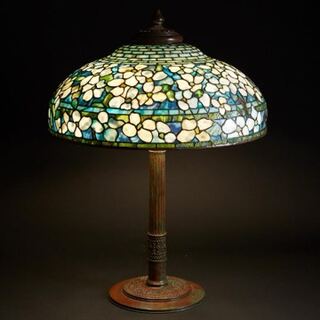 Tiffany Studios Leaded Glass and Bronze "Dogwood" LampSold For $60,000
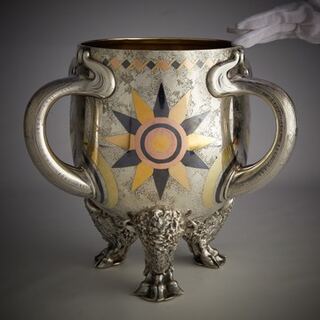 Large Tiffany Sterling Trophy Cup, 83.21 Troy ozSold For $44,000
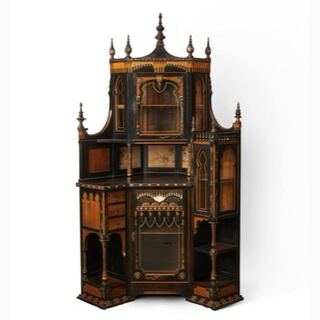 Carlo Bugatti Monumental Corner CabinetSold For $40,000
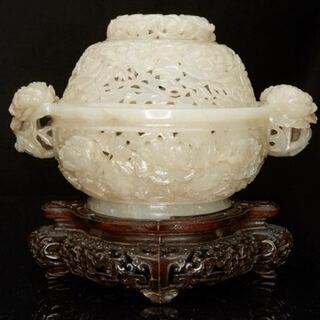 18th c. Chinese Reticulated Jade Censer with StandSold For $34,000
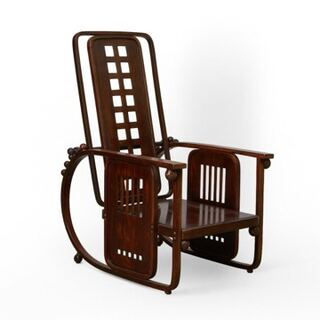 Joseph Hoffmann for Kohn "Sitzmaschine" ChairSold For $15,000
 Hans Wegner AP Stolen "Papa Bear" Chair & OttomanSold For $15,000
 Grace Hartigan "Dublin" Oil Painting 1958-59Sold For $525,000